
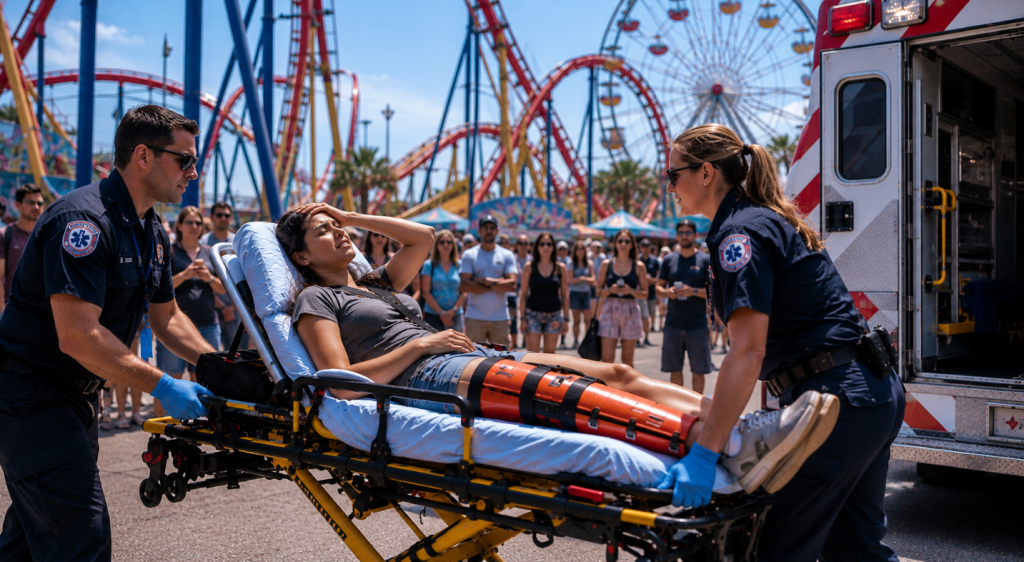
A family should not leave a California amusement park in an ambulance because a ride restraint failed or an operator ignored a basic safety check. But catastrophic amusement park accidents happen in seconds. One mechanical failure, sudden stop, or ride malfunction can leave victims with permanent spinal damage, traumatic brain injuries, amputations, or the loss of someone they love.
The aftermath rarely feels real at first. Many victims leave the hospital unable to work, sleep normally, lift their children, or return to routines that once felt ordinary. Some become fearful of crowds, loud mechanical sounds, or even family outings after witnessing a violent ride failure firsthand. At the same time, amusement parks and insurance companies often begin protecting themselves immediately, sometimes before injured families fully understand how serious the long-term consequences may be.
Siegal & Richardson, LLP represents amusement park injury victims and families throughout Oakland, Berkeley, and across California after catastrophic accidents involving dangerous rides, defective equipment, negligent operators, and unsafe park conditions. Below, the firm explains how these accidents happen, who may be legally responsible, the compensation available under California law, and how an experienced California amusement park injury lawyer can help after a devastating injury or wrongful death.
Amusement Park Injury Lawyer in California
After a serious amusement park accident, waiting too long to get legal help can put injured victims at a major disadvantage. Amusement parks, ride companies, and insurers often move quickly to limit responsibility while families are still trying to understand what happened. For more than 35 years, Siegal & Richardson, LLP has represented people across California in difficult, high-stakes injury cases involving life-changing harm and substantial financial losses. The firm is known for taking on powerful defendants and fighting aggressively for injured clients when the stakes are highest. Call (510) 271-6720 or contact the firm online for a free consultation.
Major Types of California Amusement Park Accidents
Ride Malfunction Accidents — Roller coasters, drop towers, spinning rides, Ferris wheels, and other attractions can malfunction because of mechanical failures, electrical problems, defective restraints, brake failures, or sudden ride stoppages. These incidents are among the most serious amusement park accidents in California because they often involve high speeds and elevated ride structures.
Fall Accidents at Amusement Parks — You can suffer serious harm after falling from a ride, slipping on wet walkways, tripping near ride platforms, or losing balance while boarding or exiting an attraction. Falls commonly happen at water parks, crowded walkways, loading zones, staircases, and elevated platforms throughout California amusement parks.
Ride Operator and Employee Error Accidents — Some amusement park injuries happen because ride operators fail to follow safety procedures, improperly secure restraints, allow unsafe riders onto attractions, or operate rides incorrectly. Employee mistakes during loading and unloading procedures can also place riders in dangerous situations.
Water Park and Drowning Accidents — Wave pools, lazy rivers, water slides, and splash attractions can become dangerous when parks are overcrowded, poorly supervised, or improperly maintained. Drowning incidents, near-drowning events, and rider collisions frequently occur at water parks and aquatic attractions.
Defective Equipment and Maintenance Accidents — Broken ride components, faulty harnesses, damaged tracks, worn mechanical systems, and neglected inspections can create hazardous conditions inside amusement parks. Poor maintenance remains a major factor in many serious California amusement park accidents.
Crowd and Pedestrian Accidents — Large crowds at amusement parks, fairs, and festivals can lead to trampling incidents, pedestrian collisions, unsafe crowd surges, and transportation-related accidents involving trams or shuttle vehicles. These accidents often happen during busy holidays and special events.
Food and Beverage Accidents — Unsafe food handling, contaminated beverages, and improperly stored ingredients at amusement parks can expose visitors to food poisoning and other serious health risks.
Fire, Electrical, and Explosion Accidents — Electrical malfunctions, overheating equipment, fireworks problems, and kitchen-related fires can place amusement park visitors in immediate danger. Though less common, these incidents can cause mass-casualty emergencies at large California attractions.
Amusement Park Assault and Security Incidents — Inadequate security, poor crowd management, and delayed emergency response can contribute to fights, assaults, or other violent incidents inside amusement parks and surrounding parking areas. These events are more likely during heavily attended gatherings or nighttime operations.
Transportation and Parking Lot Accidents — Shuttle buses, parking trams, rideshare zones, and congested parking lots at California amusement parks can create dangerous traffic conditions for drivers and pedestrians. Poor signage, distracted drivers, and overcrowded vehicle areas may increase the likelihood of serious accidents near park entrances and exits.
Weather-Related Amusement Park Accidents — High winds, extreme heat, heavy rain, and lightning can create dangerous conditions at outdoor amusement parks across California. Severe weather may affect ride stability, walking surfaces, electrical systems, and emergency response efforts, especially during crowded seasonal events and summer operations.
Amusement Park Accidents Involving Children — Children face unique risks at amusement parks because of their size, limited awareness of danger, and inability to recognize unsafe conditions. Accidents involving children often happen on rides with height restrictions, playground attractions, water features, and crowded family areas where supervision may be limited.
Fatal Amusement Park Accidents — Some California amusement park incidents result in death after catastrophic ride failures, drowning events, falls, or large-scale mechanical accidents. Families are often left searching for answers about how the tragedy occurred and whether it could have been prevented.
Unique Injuries Caused by Amusement Park Accidents
Traumatic Brain and Head Injuries — High-speed rides, sudden jerking movements, ride ejections, and violent impacts can cause concussions, skull fractures, and traumatic brain injuries. Even without direct head contact, abrupt motion on amusement rides may lead to serious neurological complications.
Spinal Cord and Neck Injuries — Roller coasters and thrill rides can place extreme force on your neck and spine during sharp turns, sudden drops, and rapid acceleration. Some victims experience herniated discs, nerve damage, or partial paralysis after severe amusement park accidents.
Crush and Amputation Injuries — Defective ride mechanisms, moving machinery, and faulty restraints can trap limbs or pin riders against hard surfaces. These accidents may result in permanent loss of mobility or traumatic amputations requiring lifelong medical care.
Drowning-Related Brain Injuries — Drowning incidents at California water parks can deprive the brain of oxygen within minutes. Children are especially vulnerable to long-term cognitive and developmental complications after submersion accidents.
Severe Emotional and Psychological Trauma — Witnessing a catastrophic ride failure, drowning event, or fatal amusement park accident can leave lasting emotional harm. Many victims experience anxiety, panic attacks, sleep disturbances, or post-traumatic stress symptoms long after the incident occurs.
Where California Amusement Park Injuries Commonly Happen
Los Angeles Amusement Parks and Theme Parks — Southern California contains some of the busiest amusement parks in the country, including Disneyland, Universal Studios Hollywood, Six Flags Magic Mountain, and Knott’s Berry Farm. Large crowds, high-speed rides, and year-round tourism increase the likelihood of serious amusement park accidents throughout the Los Angeles area.
Bay Area Amusement Parks and Fairgrounds — Visitors in San Francisco, Oakland, Berkeley, San Jose, Fremont, Hayward, and Piedmont may encounter amusement park injuries at local fairs, waterfront attractions, traveling carnivals, seasonal festivals, and family entertainment centers. Temporary rides and mobile attractions can present additional safety concerns because equipment is frequently transported and reassembled between events.
Sacramento and Northern California Fair Attractions — State fairs, county fairs, and seasonal amusement events in Sacramento and nearby Northern California communities often attract large crowds during holidays and summer months. Ride malfunctions, crowd-related accidents, and pedestrian injuries may occur at both permanent and temporary attractions.
Santa Rosa and Wine Country Family Attractions — Seasonal festivals, fairgrounds, and community entertainment venues in Santa Rosa and surrounding Wine Country areas can expose families to ride-related accidents, slip and fall hazards, and overcrowding incidents during busy event periods.
California Water Parks and Seasonal Attractions — Water parks, haunted attractions, pop-up amusement events, and seasonal festivals across California frequently draw visitors from throughout the state. Many serious accidents happen during peak summer travel periods when parks experience overcrowding, staffing shortages, and increased ride usage.
Parking Areas and Transportation Zones Near Amusement Parks — Serious accidents can also happen outside the amusement park itself. Congested parking lots, rideshare pickup zones, pedestrian crossings, shuttle loading areas, and nearby intersections around California amusement parks may create dangerous conditions for visitors arriving at or leaving major attractions.
Who May Be Liable for an Amusement Park Injury
Amusement Park Owners and Operators — If an amusement park fails to keep rides, walkways, or common areas reasonably safe, you may have a claim under California Civil Code § 1714. Park owners and operators may be responsible for unsafe ride conditions, poor maintenance, overcrowding, inadequate security, or dangerous property conditions that contribute to an accident.
Ride Manufacturers and Equipment Companies — Companies that design, build, assemble, or sell amusement rides may be liable when defective equipment causes an injury. California product liability laws may apply when a ride contains a dangerous design defect, manufacturing defect, or inadequate safety warnings. These claims often involve defective restraints, braking systems, tracks, or mechanical components.
Ride Operators and Park Employees — Ride operators and employees may create dangerous situations by failing to secure restraints, ignoring safety rules, operating rides improperly, or allowing unsafe riders onto attractions. Under California Civil Code § 1714, careless employee conduct may expose both the employee and amusement park to liability.
Maintenance Contractors and Inspection Companies — Outside contractors hired to inspect, maintain, repair, or assemble rides may also share responsibility for an accident. California regulates amusement rides under California Labor Code §§ 7900–7919 for temporary amusement rides and California Labor Code §§ 7920–7932 for permanent amusement rides. These laws require inspections, maintenance procedures, and safety oversight for amusement attractions throughout California.
Public Entities and Government-Owned Property — Some amusement parks, fairs, and event venues operate on public property or involve government agencies. California Government Code § 835 may apply when a dangerous condition on public property contributes to an injury. Claims against government entities are also controlled by the California Government Claims Act under California Government Code §§ 810–998.3.
California Statute of Limitations for Amusement Park Injury Claims — Most California amusement park injury lawsuits must be filed within two years under California Code of Civil Procedure § 335.1. Wrongful death claims generally follow the same deadline. If a government agency is involved, California Government Code § 911.2 usually requires you to file an administrative claim within six months of the accident.
How a California Amusement Park Injury Attorney Helps You
Investigating the Amusement Park Accident — A California amusement park injury attorney can move quickly to preserve ride maintenance records, surveillance footage, inspection reports, witness statements, and electronic ride data before critical evidence disappears. This is especially important after serious accidents at major amusement parks and fairs in Los Angeles, San Francisco, Oakland, San Jose, and Sacramento.
Handling Insurance Companies and Park Corporations — Large amusement parks and ride companies often have aggressive insurance carriers and defense lawyers working immediately after an accident. Your attorney can handle communications, protect you from unfair settlement tactics, and build evidence showing how the amusement park failed to keep visitors safe.
Working With Ride Safety and Medical Experts — Amusement park injury cases often involve complicated mechanical systems, ride inspections, and long-term medical issues. Your lawyer may work with engineers, safety inspectors, medical specialists, and economic experts to prove what caused the accident and how your injuries affect your future.
Filing a Lawsuit and Pursuing Full Compensation — If the amusement park or insurance company refuses to offer fair compensation, your California personal injury lawyer can file a lawsuit and pursue damages for medical bills, lost income, pain and suffering, future treatment costs, disability, emotional trauma, and wrongful death losses for surviving family members.
Frequently Asked Questions
How much is a California amusement park injury case worth?
The value of an amusement park injury case depends on medical expenses, lost income, future treatment costs, permanent disabilities, emotional suffering, and whether the accident caused wrongful death.
Can you sue an amusement park for injuries?
Yes. You may sue an amusement park if negligence, defective rides, unsafe conditions, poor maintenance, inadequate security, or employee mistakes contributed to your amusement park accident.
How long do you have to file a lawsuit?
Most amusement park injury lawsuits must be filed within two years, although claims involving public entities or government-owned fairgrounds may involve shorter deadlines and special filing requirements.
What should you do after a California amusement park accident?
You should seek medical treatment immediately, report the incident, photograph the scene, preserve evidence, avoid speaking with insurance adjusters, and contact an amusement park injury attorney promptly.
How do you prove an injury claim?
You may need ride inspection records, maintenance reports, surveillance footage, witness statements, medical records, and expert analysis to prove negligence in a California amusement park injury claim.
Should you hire a California amusement park injury lawyer?
Yes. An amusement park injury lawyer can investigate the accident, preserve evidence, negotiate with insurance companies, and pursue compensation against amusement parks and corporate defendants.
How much does a personal injury lawyer cost?
Most California personal injury attorneys work on a contingency fee basis, meaning you typically pay no upfront fees and attorney compensation comes from a successful recovery.
What damages can an amusement park injury attorney recover?
A California amusement park injury attorney may pursue compensation for medical bills, lost wages, future care costs, pain and suffering, emotional distress, disability, and wrongful death damages for surviving family members.
California Amusement Park Injury Lawyers
After a catastrophic amusement park accident, families are often forced into a situation they were never prepared for. A parent may suddenly need help getting out of bed after a spinal injury. A teenager who once loved roller coasters may struggle with panic symptoms after witnessing a ride malfunction. Some victims spend months in rehabilitation while trying to explain to employers, schools, or family members why they still cannot function the way they did before the accident.
Insurance companies know how vulnerable people are during this period. In many cases, they try to resolve claims quickly before the full physical, emotional, and financial impact of the injury becomes clear. For more than 35 years, Siegal & Richardson, LLP has represented injured people and families throughout California in catastrophic injury and wrongful death cases involving dangerous property conditions, defective equipment, and preventable negligence. The firm has recovered millions for clients and built a reputation for handling difficult cases involving serious injuries and powerful defendants. Their Berkeley premises liability attorneys fight aggressively for people whose lives have been permanently changed by devastating accidents.
If you or someone you love suffered injuries in a California amusement park accident, contact Siegal & Richardson, LLP by calling (510) 271-6720 or contacting us online for a free consultation.