
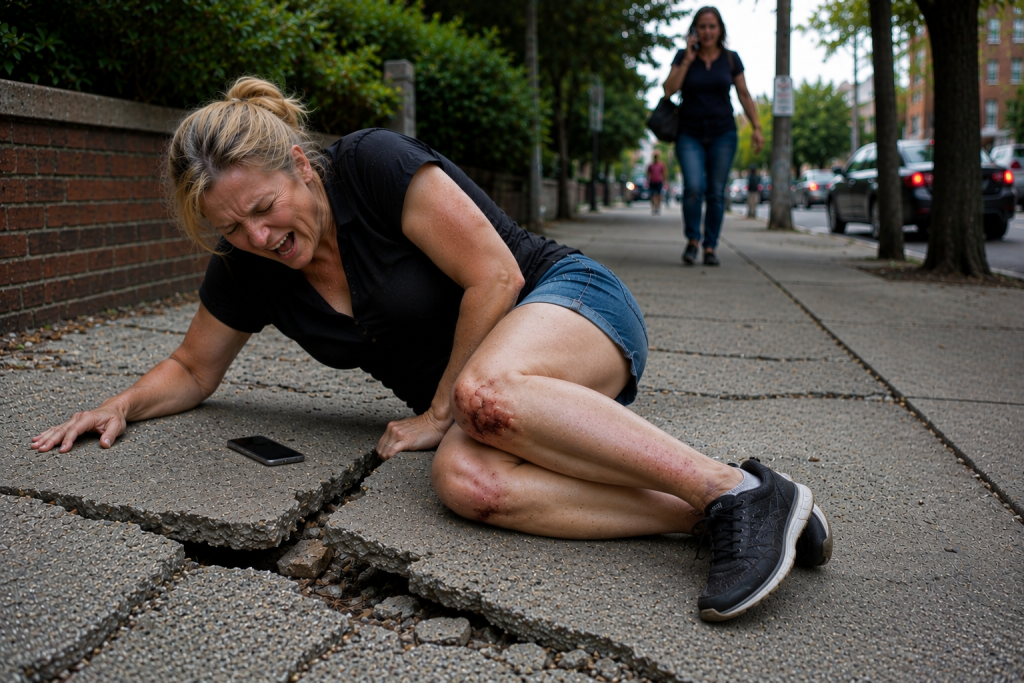
In Oakland, Berkeley, and San Francisco, people learn to live around broken sidewalks. You stop noticing the lifted concrete outside corner stores, the uneven pavement near apartment buildings, and the tree roots pushing through walkways because the damage has been there for years. Then one bad step changes the course of your life. A hard fall onto concrete can leave someone facing surgery, chronic pain, a serious head injury, or months away from work without warning.
What many injured people are not prepared for is what happens afterward. Medical bills start arriving quickly. Everyday tasks become harder. At the same time, the property owner blames the city, the city claims it had no notice, and the insurance company starts treating a serious injury like a minor inconvenience. Siegal & Richardson, LLP represents people across California who are dealing with the physical, financial, and emotional fallout of serious sidewalk accidents. Below, the firm explains how sidewalk accidents occur, who may be responsible for unsafe conditions, the types of compensation injured victims may pursue, and how a California sidewalk accident lawyer can stand up to property owners, insurance companies, and public entities on your behalf.
Sidewalk Accident Lawyer in California
Insurance companies and public agencies often try to minimize sidewalk injury claims from the very beginning. Siegal & Richardson, LLP has spent decades representing injured people throughout California in serious premises liability and unsafe property cases involving businesses, insurers, and cities. The firm has recovered substantial results in serious fall cases, including a $500,000 recovery involving a fall in a dark museum and a $425,000 grocery store fall case. If you were seriously injured because of a dangerous sidewalk condition, contact Siegal & Richardson, LLP at (510) 271-6720 or reach out online for a free, confidential consultation.
Main Types of California Sidewalk Accidents
Trip and Fall on Cracked or Uneven Sidewalks — You can suffer a serious fall when broken concrete, raised sidewalk slabs, potholes, or uneven pavement suddenly catch your foot while you walk. In California cities like Berkeley, Oakland, Los Angeles, and Sacramento, older sidewalks are often damaged by tree roots, weather exposure, and years of wear. Even a small height difference between sidewalk sections can throw you forward without warning. These accidents frequently happen in residential neighborhoods, downtown business districts, apartment complexes, shopping areas, and near schools or parks. Many victims suffer injuries because they do not see the dangerous condition until it is too late to react.
Slip and Fall on Wet or Slippery Sidewalks — Dangerous surfaces can develop when rainwater, spilled liquids, grease, moss, algae, or poor drainage create slick walking conditions. In coastal areas like San Francisco and Santa Rosa, moisture buildup can make sidewalks especially hazardous during colder or rainy months. You may also encounter slippery sidewalks outside restaurants, grocery stores, office buildings, or commercial properties where cleaning crews, leaking equipment, or tracked-in water create hidden dangers. Unlike a trip and fall accident, a slip and fall often causes your feet to suddenly slide out from underneath you, increasing the risk of head injuries, back injuries, and broken bones.
Sidewalk Accidents Caused by Poor Lighting — Reduced visibility can make it difficult for you to spot cracks, gaps, loose pavement, or other sidewalk hazards at night. Poorly lit sidewalks are common near apartment complexes, parking lots, alleys, transit stops, and commercial properties throughout Hayward, Fremont, and San Jose. Burned-out streetlights and inadequate exterior lighting can create dangerous walking conditions for pedestrians, especially seniors and people with limited vision. These accidents often occur during evening commutes or while walking through unfamiliar areas.
Accidents in Construction Zones — Ongoing construction projects can create serious pedestrian hazards when walkways are blocked, uneven, poorly marked, or covered with debris. Construction crews often reroute pedestrians through temporary sidewalks or narrow walkways that may not be safe. You may encounter exposed cords, loose gravel, uncovered holes, broken pavement, or missing warning signs near construction sites. In some situations, barriers meant to protect pedestrians are improperly installed or completely absent. Heavy equipment and construction materials can also obstruct walking paths, forcing you into unsafe areas near traffic or unstable ground surfaces.
Sidewalk Accidents Caused by Falling Objects — Unexpected debris falling from nearby buildings, scaffolding, balconies, trees, or construction sites can seriously injure pedestrians walking below. In crowded urban areas like San Francisco and Los Angeles, you may face risks from loose signs, broken tree branches, unsecured construction tools, or materials falling from elevated work areas. Wind, poor maintenance, or negligent construction practices can increase the likelihood of these accidents. Even small falling objects can cause severe head injuries, neck injuries, or facial trauma when they strike a pedestrian without warning.
Accidents Involving Bicycles, Scooters, and E-Bikes — Fast-moving riders on sidewalks can knock you down before you have time to react. Electric scooters, bicycles, and delivery e-bikes frequently travel through pedestrian areas in busy California cities. Some riders illegally use sidewalks to avoid vehicle traffic, creating dangerous conditions for pedestrians, especially near shopping centers, public transit stations, restaurants, and crowded downtown streets. Collisions involving scooters or e-bikes can cause serious injuries because of the speed and force involved, particularly when elderly pedestrians or children are struck.
Sidewalk Accidents Near Public Transit Stops — Large crowds, damaged pavement, and rushed foot traffic can increase the risk of serious pedestrian falls near bus stops, train stations, and transit hubs. Sidewalks surrounding BART stations, bus terminals, and light rail stops often experience heavy daily use that contributes to sidewalk deterioration. Uneven pavement, cracked concrete, poor lighting, and slippery conditions can become especially dangerous during busy commuting hours when pedestrians have limited space to safely navigate crowded walkways.
Serious Injuries Caused by Sidewalk Accidents
Head and Brain Injuries — You can suffer a concussion or traumatic brain injury when your head strikes the pavement during a sidewalk fall or pedestrian collision. Even seemingly minor head trauma may lead to headaches, dizziness, memory problems, confusion, balance issues, or long-term cognitive complications that interfere with your daily life.
Broken Bones and Joint Injuries — The force of a sidewalk accident can easily fracture your wrist, arm, ankle, hip, or shoulder as you try to catch yourself during a fall. Older adults in California often face a higher risk of severe fractures that require surgery, rehabilitation, or extended mobility assistance.
Spinal Cord and Nerve Injuries — Hard impacts on concrete sidewalks can damage your back, neck, spinal discs, or nerves. These injuries may cause chronic pain, numbness, reduced mobility, muscle weakness, or lasting physical limitations that affect your ability to work or complete routine activities.
Facial and Dental Injuries — Direct facial impact with pavement, debris, or nearby objects can result in broken teeth, jaw injuries, facial fractures, eye injuries, or permanent scarring. Many victims require reconstructive dental or cosmetic procedures after a serious sidewalk accident.
Fatal Injuries in Sidewalk Accidents — Severe head trauma, internal bleeding, or complications from catastrophic injuries can become fatal, particularly for elderly pedestrians. Fatal sidewalk accidents may also occur when pedestrians are struck by scooters, bicycles, falling debris, or nearby vehicles.
Where California Sidewalk Injuries Commonly Happen
Berkeley — Berkeley sidewalks are notorious for damage caused by large street trees, especially in older residential areas near North Berkeley, Elmwood, and the neighborhoods surrounding the university. It is common to see sidewalks lifted several inches by roots, creating hazards that are easy to miss when you are walking through crowded areas or crossing intersections near campus.
Oakland — In Oakland, many falls happen around older commercial corridors and transit-heavy areas where sidewalks have deteriorated over time. Downtown Oakland, parts of International Boulevard, and areas near BART stations often have uneven pavement, broken concrete, poor nighttime lighting, and crowded walkways that leave little room to avoid hazards.
San Francisco — San Francisco creates a different set of risks because steep grades and older sidewalks can make even minor defects dangerous. A cracked sidewalk on a hill in neighborhoods like Nob Hill or Russian Hill can easily cause a hard forward fall, especially during rain or heavy foot traffic near transit stops and tourist areas.
San Jose and Surrounding Cities — In San Jose, Fremont, Hayward, Sacramento, Santa Rosa, and Piedmont, sidewalk accidents often happen near shopping centers, apartment complexes, schools, and construction zones where maintenance falls behind growth. In suburban areas, long stretches of damaged pavement can go unrepaired for years, especially in quieter residential neighborhoods where hazards are easier to overlook.
Who Can Be Held Liable for a Sidewalk Injury
Property Owners — A property owner may be responsible if a dangerous sidewalk conditionnext to their property caused your injuries. California Civil Code § 1714 requires people and businesses to use reasonable care to prevent harm to others. California Streets and Highways Code § 5610 also requires property owners to maintain sidewalks bordering their property in a reasonably safe condition. Cracked concrete, raised sidewalks from tree roots, broken pavement, and neglected walkways are common issues in California sidewalk accident claims.
Cities and Public Agencies — Many sidewalks are owned or controlled by cities or counties. Under California Government Code § 835, a public entity may be liable if a dangerous condition on public property caused your injury. California Government Code § 830 defines what qualifies as a dangerous condition, while California Government Code § 835.2 explains when a public agency can be considered aware of the problem. Public agencies often argue that a sidewalk defect was too minor to create liability under California Government Code § 830.2.
Businesses and Commercial Properties — Businesses can also be liable when dangerous conditions outside stores, restaurants, office buildings, or shopping centers cause sidewalk accidents. Spilled liquids, damaged pavement, loose mats, poor lighting, and unsafe outdoor dining areas are common examples. Liability is usually based on California Civil Code § 1714and whether the business failed to reasonably maintain the area.
Construction Companies and Contractors — Construction work can create serious sidewalk hazards when companies leave debris, uneven surfaces, exposed holes, or unsafe detours in pedestrian walkways. Contractors may be liable if careless construction activity causes injuries.
Cyclists, Scooter Riders, and Other Individuals — Some sidewalk accidents happen because a cyclist, scooter rider, delivery driver, or another pedestrian acted carelessly. California Vehicle Code § 21235 generally prohibits riding a motorized scooter on a sidewalk except in limited situations.
California Statute of Limitations — California Code of Civil Procedure § 335.1 usually gives you two years to file a personal injury lawsuit. Claims against a city or public agency move much faster. Under California Government Code § 911.2, you generally must file a government claim within six months of the accident. California Government Code § 945.4 also requires that claim process to happen before you can file a lawsuit in court.
What a California Sidewalk Accident Attorney Does for You
Preserve Evidence Before the Sidewalk Gets Repaired — In cities like Oakland and San Francisco, dangerous sidewalk conditions often get fixed shortly after someone is injured. Cracks get patched, tree roots get removed, and construction areas change fast. A California personal injury lawyer can move quickly to document the condition before critical evidence disappears.
Handle Insurance Companies That Downplay Sidewalk Injuries — Insurance adjustersfrequently treat sidewalk falls like minor accidents, even when victims suffer serious head injuries, fractures, or long-term mobility problems. A lawyer can gather medical evidence, challenge low settlement offers, and push back when insurers try to shift blame onto you.
Navigate Strict Deadlines for Claims Against Cities — If your accident happened on a public sidewalk in Berkeley, San Jose, or another California city, special government claim deadlines may apply. Missing those deadlines can seriously damage your case before it even begins.
Identify Everyone Who May Share Responsibility — Sidewalk accident cases are often more complicated than they first appear. Depending on the location, responsibility may involve a city agency, property owner, business tenant, contractor, or property management company that failed to address a dangerous condition.
Fight for Compensation That Reflects the Real Impact of the Injury — A serious sidewalk accident can leave you dealing with surgery, rehabilitation, lost income, chronic pain, and lasting physical limitations. In fatal sidewalk accident cases, a lawyer can also pursue wrongful death damages for surviving family members, including funeral expenses and loss of financial support.
Frequently Asked Questions
How much is my trip and fall case worth in California?
The value of a trip and fall case depends on your medical expenses, lost income, injury severity, future treatment needs, and whether the injuries caused long-term physical limitations.
Can I sue the city for falling on a broken sidewalk?
You may be able to sue a city or public agency if a dangerous public sidewalk caused your injuries, but government claims involve strict deadlines and special filing requirements.
Do I have a claim for an uneven sidewalk injury?
You may have a valid claim if cracked pavement, raised concrete, poor maintenance, or another dangerous sidewalk condition caused you to get hurt while walking.
How long do I have to file a trip and fall lawsuit in California?
Most California trip and fall lawsuits must be filed within two years, although claims involving public property often require formal notice within six months of the accident.
Should I hire a lawyer after a sidewalk fall accident?
A lawyer can investigate the dangerous condition, preserve evidence, identify responsible parties, and deal with insurance companies that try to deny or reduce injury claims.
Can an attorney help with claims against the city?
Yes. A California sidewalk injury attorney can handle government claim procedures, obtain maintenance records, preserve evidence, and pursue compensation from public agencies responsible for unsafe sidewalks.
What compensation can I recover after a sidewalk injury?
You may recover compensation for medical expenses, lost wages, rehabilitation costs, pain and suffering, disability, and future medical treatment related to the accident.
How much does a California trip and fall lawyer cost?
Most California trip and fall lawyers work on a contingency fee basis, meaning you usually do not pay attorney fees unless compensation is successfully recovered in your case.
California Sidewalk Accident Lawyers
A serious sidewalk injury can put enormous pressure on a family within days. Surgery, physical therapy, missed paychecks, and ongoing pain can quickly destabilize a household financially. Insurance companies often treat these cases like ordinary falls even when the injuries are severe and long-term.
For decades, Siegal & Richardson, LLP has represented injured people throughout California in difficult property injury lawsuits. The firm has recovered substantial results in serious fall cases, including a $500,000 recovery involving a fall in a dark museum and a $425,000 grocery store fall case. The attorneys are known for taking on difficult cases and standing up to businesses, insurers, and public entities that try to avoid responsibility for unsafe property conditions.
If you were seriously injured because of a dangerous sidewalk condition, contact Berkeley premises liability lawyers at Siegal & Richardson, LLP at (510) 271-6720 or reach out online for a free, confidential consultation.