
When a motor vehicle accident happens in California, the impact reaches far beyond the crash itself. You may be dealing with pain, lost income, medical appointments, and the stress of wondering how everything will get paid for. In busy regions like the San Francisco Bay Area—including Berkeley, Oakland, San Francisco, and surrounding communities—as well as Los Angeles and Southern California, these cases can become complicated fast. That is why having an experienced motor vehicle accident lawyer who understands California law and the local courts across the state matters.
Siegal & Richardson, LLP has built its reputation on fighting hard for people harmed by careless and reckless conduct, using decades of litigation experience to take on individuals, corporations, and insurance companies alike. Below, this piece breaks down essential information about motor vehicle accident cases, including how these crashes happen, who may be responsible, what legal options injured people may have, the types of financial compensation that may be pursued, and how a California motor vehicle accident lawyer can step in and fight on your behalf for accountability, compensation, and justice.
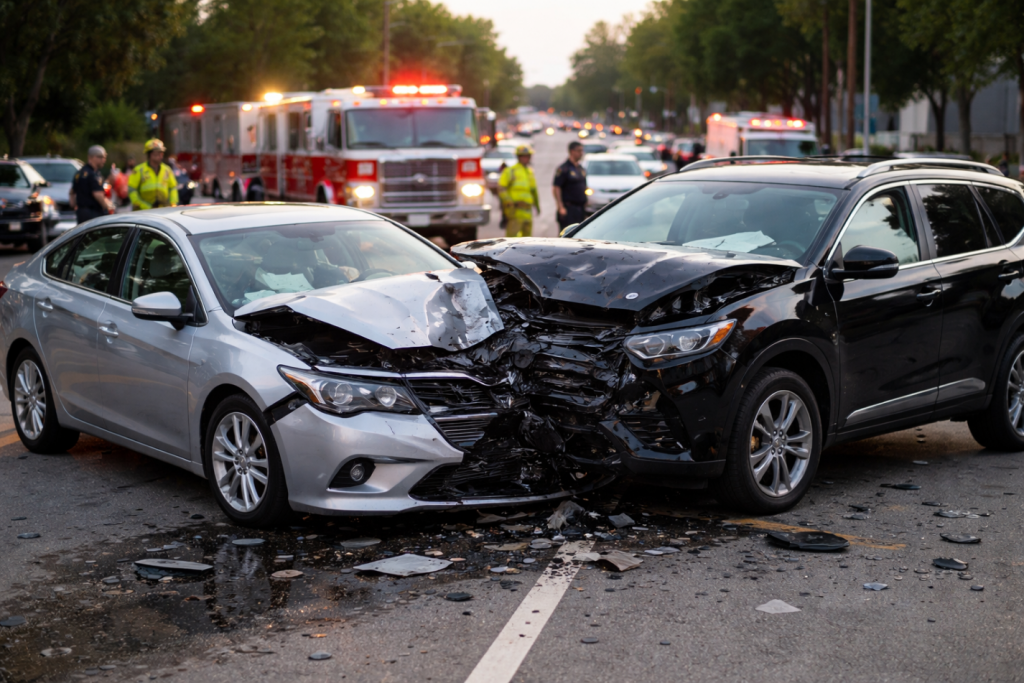
Motor Vehicle Accident Lawyer in California
If you were hurt in a motor vehicle accident in California, getting legal help early can make a real difference. The experienced personal injury lawyers at Siegal & Richardson, LLP are ready to step in, deal with the insurance companies, and protect your interests from the start. Contact Siegal & Richardson, LLP by calling (510) 271-6720 or contacting us online for a free consultation to talk through your situation and your legal options.
Types of Motor Vehicle Accidents You May Face in California
Car Accidents — Most California motor vehicle accidents involve passenger vehicles and happen because drivers speed, follow too closely, look at their phones, or fail to yield. You may be rear-ended in traffic, struck head-on on a two-lane road, or hit from the side at an intersection. These car crashes are common on California freeways and city streets and can cause serious injuries even at lower speeds.
Truck Accidents — Crashes involving commercial trucks often cause severe or fatal injuries due to the massive size and weight of these vehicles. You may be harmed when a tractor-trailer jackknifes, loses its cargo, or crashes into stopped traffic. These accidents frequently occur along major freight routes near ports, warehouses, and highways throughout California.
Motorcycle Accidents — Riders face extreme danger when drivers fail to notice motorcycles or misjudge their speed. You may be hit when a driver turns left in front of you, merges without checking blind spots, or follows too closely. Without physical protection, motorcycle accidents often lead to life-altering injuries.
Pedestrian Accidents — Being struck while walking puts you at high risk of catastrophic harm. You may be hit in a crosswalk, parking lot, or school zone when drivers run lights, speed, or make unsafe turns. These accidents are common in dense cities such as Los Angeles, San Francisco, Berkeley, and Oakland.
Bicycle Accidents — Cyclists are frequently injured when drivers fail to share the road. You may be hit by a turning vehicle, struck by an opening car door, or forced off the road by a driver drifting into a bike lane. These crashes occur often in commuter-heavy areas like San Jose, Fremont, Hayward, and Santa Rosa.
Rideshare Accidents — Accidents involving Uber or Lyft often happen when drivers are distracted by apps or rushing between fares. You may be injured as a passenger, another driver, or a pedestrian. These crashes commonly occur in busy downtown areas and entertainment districts throughout California.
Bus and Public Transit Accidents — Collisions involving city buses or school buses can injure passengers, pedestrians, and other motorists. You may be hurt when a bus stops suddenly, crashes into traffic, or strikes someone outside the vehicle. These accidents often involve multiple victims and occur in high-traffic urban corridors.
Commercial Vehicle Accidents — Crashes involving delivery vans, utility vehicles, or employer-owned cars create serious risks. You may be injured when a driver is rushing to meet deadlines or driving unfamiliar routes. These vehicles are common on California roads and often contribute to complex accident scenarios.
Hit and Run Accidents — Some drivers flee the scene after causing a crash. You may be left injured without immediate identification of the at-fault driver. Hit and run accidents frequently occur in urban areas and create additional stress during recovery.
Drunk or Drugged Driving Accidents — Impaired drivers pose a severe threat to everyone on the road. You may be injured when a driver’s judgment, reaction time, or coordination is compromised. These crashes often result in serious injuries or death.
Distracted Driving Accidents — Distractions such as texting, navigation apps, or in-car technology can lead to sudden and dangerous mistakes. You may be hit when a driver takes their eyes off the road for just seconds.
Multi-Vehicle Accidents — Chain-reaction crashes often happen on busy California freeways. You may be injured when multiple vehicles collide in heavy traffic, making it difficult to determine how the crash unfolded.
Single-Vehicle Accidents — Some crashes involve only one vehicle but still cause serious harm. You may be injured when a vehicle leaves the roadway due to road hazards, mechanical failure, or poor visibility.
Fatal Motor Vehicle Accidents — When a crash results in loss of life, surviving family members may face overwhelming emotional and financial hardship. These accidents can occur in any setting and often leave lasting consequences for loved ones.
Injuries You May Suffer in a California Motor Vehicle Crash
Traumatic Brain Injuries (TBI) — A sudden impact can cause your brain to move violently inside your skull, leading to concussions or more severe brain damage. Symptoms may appear immediately or develop over time, affecting memory, mood, and daily function.
Spinal Cord and Back Injuries — Damage to the spine can result in chronic pain, limited mobility, or paralysis. You may suffer herniated discs, nerve damage, or spinal fractures that require long-term medical care and rehabilitation.
Broken Bones and Crush Injuries — The force of a collision can fracture arms, legs, ribs, or hips, or trap parts of your body inside a vehicle. These injuries often require surgery, physical therapy, and extended recovery periods.
Internal Organ Damage — Blunt force trauma can injure organs such as the liver, kidneys, or lungs. These injuries may not be immediately visible but can be life-threatening without prompt medical treatment.
Severe Burns and Lacerations — Fires, explosions, or contact with hot surfaces can cause serious burns, while broken glass and metal can lead to deep cuts. Scarring and infection risks may create lasting physical and emotional effects.
Amputations and Permanent Disability — In the most severe accidents, loss of a limb or permanent loss of function may occur. These injuries dramatically alter your ability to work, care for yourself, and enjoy daily life.
Where Motor Vehicle Collisions Most Often Occur in California Communities
Los Angeles Streets and Freeways — You face a high risk of a motor vehicle accident in Los Angeles due to constant congestion, aggressive driving, and high speeds. Collisions frequently happen on I-5, I-10, I-405, and Highway 101, as well as at busy surface streets where traffic backs up daily and drivers make sudden lane changes.
San Francisco Urban Corridors — Dense traffic, steep hills, pedestrians, cyclists, and public transit all contribute to frequent crashes. You may be injured on streets like Market Street, Van Ness Avenue, or near downtown intersections where visibility is limited and traffic patterns change quickly.
Oakland and East Bay Roadways — Accidents are common throughout Oakland, especially near I-580, I-880, and major arterials connecting to Berkeley, Piedmont, and Hayward. You may encounter crashes caused by speeding, merging traffic, or heavy truck use near the Port of Oakland and industrial areas.
Berkeley and Piedmont Neighborhoods — You may be injured on narrower streets where cars, bikes, and pedestrians share limited space. Areas near UC Berkeley, residential zones, and shopping corridors see frequent collisions due to distracted driving and failure to yield.
San Jose and Silicon Valley Routes — Heavy commuter traffic creates ongoing accident risks on I-280, Highway 87, and local roads connecting tech campuses and residential neighborhoods. You may be involved in crashes during rush hours when traffic stops suddenly or drivers rush to work.
Hayward and Fremont Traffic Zones — Accidents often occur where residential streets connect to major freeways like I-880 and I-680. You may be injured at intersections, shopping centers, or commuter routes where congestion builds quickly.
Sacramento City Streets and Highways — Government offices, tourism, and commuter traffic increase crash risks on I-5, Highway 50, and downtown roads. You may encounter accidents involving multiple vehicles or pedestrians near government buildings and event venues.
Santa Rosa and Northern California Roads — You may be injured on highways and surface streets where local traffic mixes with tourists and agricultural vehicles. Visibility issues, rural roads, and higher speeds contribute to frequent collisions.
Who May Be Liable for Your California Motor Vehicle Accident
Negligent Drivers — You can hold another driver responsible when they fail to use reasonable care and cause your injuries. California law imposes a general duty of care under California Civil Code § 1714, which requires people to act reasonably to avoid harming others. When a driver violates a traffic safety law and causes a crash, California Evidence Code § 669 allows that violation to support a finding of negligence. Commonly involved laws include Vehicle Code § 22350 (Basic Speed Law), Vehicle Code § 21453 (red lights), Vehicle Code § 23152 (driving under the influence), and Vehicle Code § 23123.5 (handheld cell phone use while driving).
Employers and Companies — You may be able to hold a business responsible when a driver causes a crash while working. Under California Civil Code § 2338, an employer can be liable for the negligence of an employee acting within the scope of employment. This commonly applies to delivery drivers, service vehicles, construction vehicles, and company cars. The employer can be responsible even if it did not own the vehicle involved in the crash.
Vehicle Owners — You can sometimes pursue the owner of a vehicle even when they were not driving. California Vehicle Code § 17150 makes a vehicle owner liable when someone else causes injury while driving the vehicle with the owner’s permission. When liability is based only on permissive use, Vehicle Code § 17151 limits the amount of damages that can be recovered for injury, death, and property damage.
Rideshare Companies and App-Based Drivers — When your accident involves Uber or Lyft, insurance coverage depends on whether the driver was logged into the app and whether a ride was accepted or in progress. California requires rideshare companies to maintain specific levels of insurance coverage under California Public Utilities Code § 5433, which applies during defined periods of rideshare activity.
Manufacturers and Parts Companies — If a vehicle defect or failed component contributed to your accident or worsened your injuries, you may have a product liability claim. California law allows injured people to pursue manufacturers, distributors, and sellers when a defective product causes harm. These claims are governed primarily by California product liability law developed through court decisions and are not limited to negligence.
Government Entities for Dangerous Roads — You may have a claim against a city, county, or state agency if a dangerous road condition played a role in your crash. California Government Code § 835 allows injured people to pursue public entities for injuries caused by unsafe public property, such as poor road design, missing signs, malfunctioning signals, or dangerous intersections.
Punitive Damages for Extreme Misconduct — In cases involving especially reckless or intentional conduct, you may seek punitive damages under California Civil Code § 3294. These damages are meant to punish and deter extreme wrongdoing and are not available in ordinary negligence cases.
Time Limits That Can Bar Your Case
Two-Year Deadline for Injury and Wrongful Death Cases — Most California motor vehicle accident injury and wrongful death lawsuits must be filed within two years under California Code of Civil Procedure § 335.1.
Three-Year Deadline for Property Damage — Claims for vehicle or other property damage are generally subject to a three-year deadline under California Code of Civil Procedure § 338.
Six-Month Deadline for Government Claims — If a government entity may be responsible, you generally must file an administrative claim within six months under California Government Code § 911.2 before you can pursue a lawsuit.
How a California Motor Vehicle Accident Attorney Helps You
Immediate Local Investigation — After a California motor vehicle accident, your lawyer moves quickly to secure evidence connected to the exact location of your crash. This may include police reports, traffic camera footage, and nearby surveillance video in areas like Oakland, Berkeley, San Francisco, San Jose, Sacramento, and Los Angeles.
Handling California Insurance Claims — Your lawyer takes over all communication with insurance companies so you are not pressured into statements or quick settlements. This is especially important in complex cases involving multiple vehicles, commercial drivers, or rideshare crashes in busy urban areas.
Applying California Traffic and Injury Laws — Motor vehicle accident cases require a clear understanding of California driving laws and local road conditions. Your motor vehicle accidentattorney uses accident reports, vehicle damage, and roadway design to show how the crash happened and why compensation is owed.
Filing Cases in Local California Courts — If insurers refuse to pay fairly, your lawyer files a lawsuit in the county where the accident occurred, such as Alameda, San Francisco, Santa Clara, Sacramento, Los Angeles, or Sonoma County, and manages the case through resolution.
Pursuing Full Motor Vehicle Accident Damages — Your lawyer fights for damages specific to vehicle crashes, including medical costs, lost income, future care, pain and suffering, property damage, and wrongful death losses when a fatal accident occurs.
Using Local Experience to Your Advantage — Familiarity with local roads, courts, and insurance practices helps your lawyer build a stronger case while you focus on recovery.
Frequently Asked Questions About Motor Vehicle Accidents in California
What should you do right after a motor vehicle accident?
After a motor vehicle accident, you should call 911, seek medical care, exchange information, take photos, gather witness details, and report the crash to police and insurers to protect yourself legally.
Do you have to report a motor vehicle accident in California?
You must report a motor vehicle accident to the DMV within ten days if there is injury, death, or property damage over one thousand dollars, even if police responded.
What compensation can you recover after a motor vehicle accident?
After a motor vehicle accident, you may recover medical bills, lost wages, future treatment costs, pain and suffering, emotional distress, and property damage under California law if another party caused harm.
Can you recover damages if you were partly at fault?
You can still recover compensation after a motor vehicle accident if you were partly at fault, because California follows comparative negligence rules that reduce, but do not bar, recovery.
How long do you have to file a motor vehicle accident claim?
In most California motor vehicle accident cases, you generally have two years from the crash date to file a lawsuit, though shorter deadlines may apply in some situations.
When should you contact a motor vehicle accident lawyer?
You should contact a motor vehicle accident lawyer as soon as possible after a crash in Oakland, Berkeley, San Francisco, or nearby areas to protect evidence and avoid insurance mistakes.
What does a local motor vehicle accident lawyer handle for you?
A local motor vehicle accident lawyer investigates the crash, handles insurance companies, gathers medical evidence, calculates damages, and files a lawsuit in the proper California court when needed.
How does a lawyer deal with insurance companies?
A California motor vehicle accident attorney manages all insurer communication, prevents harmful recorded statements, challenges low offers, and negotiates settlements that reflect your injuries and losses under California law.
How much does a motor vehicle accident lawyer cost?
Most motor vehicle accident lawyers work on a contingency fee, meaning you pay nothing upfront and only pay legal fees if compensation is successfully recovered for you.
Why hire a local California motor vehicle accident lawyer?
Hiring a local California motor vehicle accident lawyer provides familiarity with local roads, courts, insurers, and accident patterns, which can strengthen your claim and improve settlement or trial outcomes.
California Motor Vehicle Accident Lawyer
A serious crash in Berkeley, Oakland, Los Angeles, or anywhere in California can leave you hurting, angry, and unsure who is really on your side. When insurance companies start calling and the bills keep coming, you need lawyers who are not afraid to push back.
The experienced motor vehicle accident attorneys at Siegal & Richardson, LLP have spent decades standing up for injured people throughout California, including the San Francisco Bay Area—Berkeley, Oakland, San Jose—and the Los Angeles area and surrounding communities. They know the local roads, the local courts, and the tactics insurers use to avoid paying what is fair.
They are tough, prepared, and fully capable of handling high-stakes motor vehicle accident cases while treating you like a real person, not a case number. Contact Siegal & Richardson, LLP by calling (510) 271-6720 or contacting us online for a free consultation to discuss your rights and what options may be available to you.