
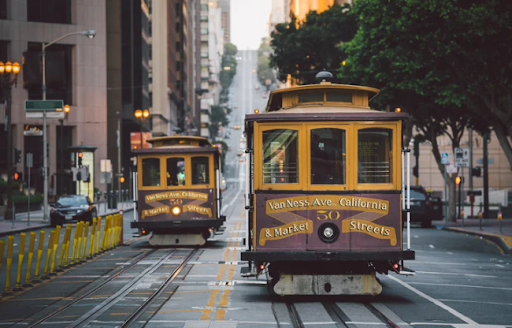
San Francisco is one of the most visited cities in the country, with narrow streets, hills, heavy traffic, and constant movement from cars, buses, bikes, scooters, and people on foot. Those conditions make some roads and intersections more likely than others to see serious car accidents and injuries.
This article breaks down dangerous roads and intersections in San Francisco, based on traffic flow, street design, and daily congestion. Knowing where risk is higher can help drivers and pedestrians stay alert and make safer travel decisions.
Most Dangerous Roads in San Francisco
Dangerous roads are often long corridors where traffic stays heavy for multiple blocks. Accidents on these roads don’t just happen at intersections, they happen anywhere along the stretch.
1. Market Street
Market Street runs through the heart of the city, connecting Downtown, Civic Center, and the Financial District. It carries buses, cars, bikes, scooters, and pedestrians all at once.
Drivers often slow down suddenly for transit stops or rideshare pickups. Lane changes happen quickly, and pedestrians cross frequently between blocks. These conditions lead to rear-end crashes, sideswipe collisions, and pedestrian impacts throughout the corridor.
2. Van Ness Avenue
Van Ness Avenue is a major north-south route that connects several neighborhoods. Even with recent traffic changes, it still sees heavy vehicle flow, buses, and turning traffic.
Frequent signal changes, wide lanes, and multiple turning points increase the risk of crashes. Pedestrians crossing Van Ness must navigate fast-moving traffic, especially near transit stops and shopping areas.
3. Geary Boulevard
Geary Boulevard is one of San Francisco’s busiest east-west roads. It carries constant commuter traffic and serves as a key transit corridor.
Drivers often accelerate between lights, and buses make frequent stops. This creates sudden braking and congestion, which raises the risk of rear-end and intersection-related crashes along the entire stretch.
4. 19th Avenue (Highway 1)
19th Avenue functions like a freeway running through residential neighborhoods. It connects drivers to Highway 280 and carries fast-moving traffic all day.
Wide lanes and higher speeds increase crash severity. Pedestrians crossing 19th Avenue face added risk due to long crossing distances and short signal times.
5. Lombard Street
Lombard Street, especially the famous curved section, attracts heavy tourist traffic. Drivers unfamiliar with the road slow suddenly, stop without warning, or misjudge turns.
These conditions lead to low-speed but frequent collisions that still cause neck, back, and soft-tissue injuries.
Most Dangerous Intersections in San Francisco
Intersections are dangerous because they combine turning vehicles, crossing pedestrians, and signal timing. Even on otherwise safe roads, a single intersection can create serious risk.
1. Market Street and Van Ness Avenue
This intersection brings together two major corridors. Vehicles move in multiple directions, buses stop frequently, and pedestrians cross in large numbers.
Drivers may rush through yellow lights or misjudge turns, leading to angle crashes and pedestrian collisions.
2. 19th Avenue and Junipero Serra Boulevard
This intersection connects residential areas to Highway 280 and carries heavy commuter traffic. Left turns across multiple lanes are common and risky.
Pedestrians crossing here face fast-moving vehicles and limited visibility, which increases injury risk.
3. Geary Boulevard and Parker Avenue
This busy crossing combines heavy commuter traffic with frequent bus stops. Vehicles stopping suddenly for transit or turns often cause rear-end crashes.
Pedestrians must cross several lanes, which adds exposure time and risk.
4. Highway 280 Southbound Exit to King Street
Freeway exit intersections are high-risk because drivers go from highway speeds to city traffic in seconds.
At the King Street exit, merging, braking, and lane changes happen quickly. Rear-end and sideswipe collisions are common here, especially during rush hour.
Tips to Reduce Accident Risk in San Francisco
Even in high-risk areas, small habits can help:
- Slow down on busy corridors
- Expect sudden stops from rideshare and delivery vehicles
- Watch for pedestrians crossing mid-block
- Avoid distractions when driving or walking
- Use crosswalks and obey signals
- Be cautious near hills and blind curves
Awareness matters, especially in dense parts of the city.
What to Do If You’re Injured on a San Francisco Road or Intersection?
If you’re hurt in a car accident or pedestrian collision, take these steps:
- Call 911
- Get medical care right away
- Take photos of the scene and injuries
- Collect witness contact information
- Save medical and repair records
- Be careful with insurance statements before understanding your options
Your Next Steps After a San Francisco Traffic Injury
Some San Francisco roads and intersections see more crashes simply because of constant traffic, quick turns, and heavy pedestrian movement. Areas like Market Street, Van Ness Avenue, Geary Boulevard, and parts of 19th Avenue often involve complex traffic patterns that increase accident risk.
Knowing where these risks are can help you stay alert, but accidents still happen. If you or someone you care about was injured on a San Francisco road or at a busy intersection, understanding your options early can help you move forward.
Siegal & Richardson, LLP offers guidance after accidents on San Francisco roads and intersections. Contact our team to discuss your situation and next steps.